Surf Launches First Social Websites with Publishers and Creators
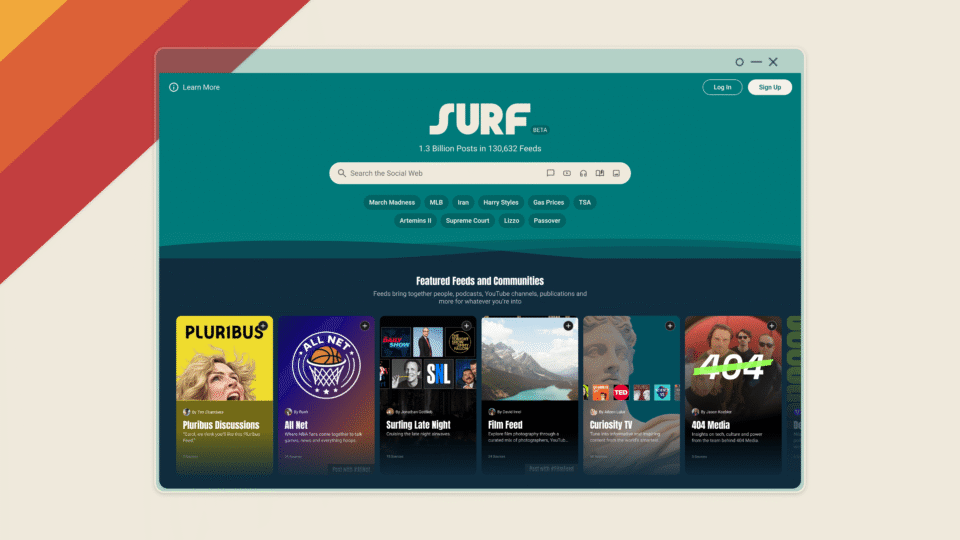
For years, most online communities have lived inside platforms they don’t control. Conversations happen in one place, videos live somewhere else, podcasts are scattered across apps, and creators have little say over how people discover or experience their work.
That’s why we’re introducing social websites — a new way for creators, publishers, podcasters and communities to build their own spaces on the web.
Social websites are destinations for conversation, community connection and realtime information. They bring together social posts, videos, podcasts, newsletters and community conversations into one destination that creators own and control. Social websites can be created to connect around issues, follow shared interests or get updates on favorite trends and topics. But what makes them especially powerful is that they are built around conversations already happening across the open social web. Instead of asking people to start over somewhere new, you can add profiles and creators from Bluesky, Mastodon, Threads, YouTube, podcasts, blogs and RSS feeds into a single, shared destination.
As Mike McCue, CEO of Flipboard and Surf, puts it:
“Social websites help podcasters, creators and publications build communities around their work and control the experience, including the algorithm. Rather than starting a community from scratch, creators can use social websites to easily bring together the people and conversations that are already happening around their podcasts, videos and newsletters across the social web.”
Meet the First Social Websites
Some of the most pioneering publishers, indie media outlets and independent creators are already live with social websites today.
Publications like The Verge, WIRED, Rolling Stone magazine, 404 Media and The Oregonian are creating dedicated spaces where readers can follow journalists, podcasts, videos and conversations all in one place. Independent journalist Taylor Lorenz’s Power User gives her audience one place to engage with her posts, her podcasts and the latest from her newsletter. And Defector is using Surf to create destinations for specific audience interests, starting with Defector: Sports!.
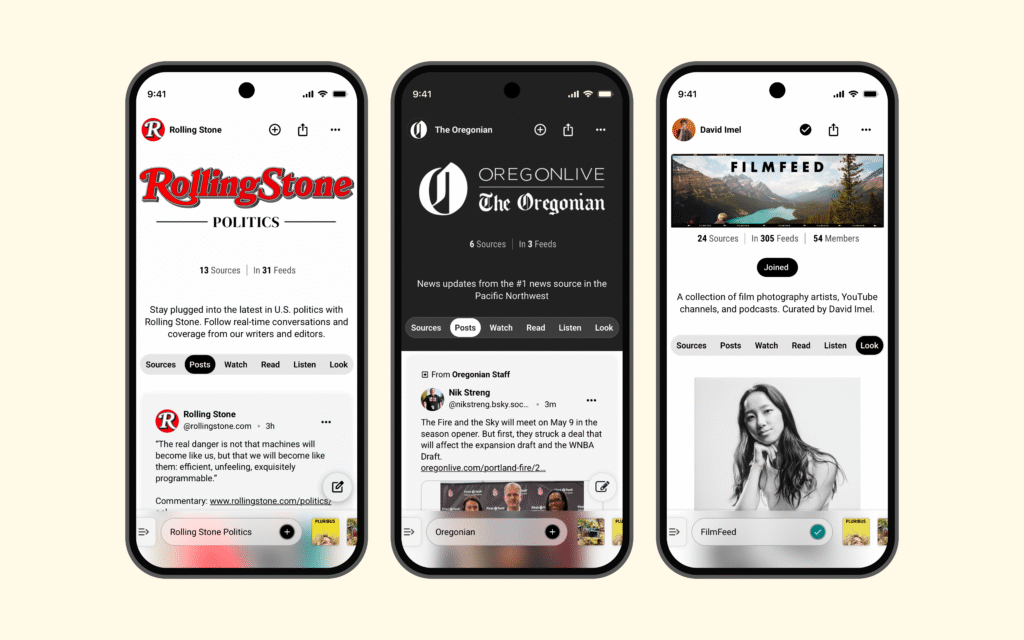
Podcasts including Decoder, Vergecast, Version History, The MMQB and Shutdown Fullcast are using social websites to bring listeners together around each episode, creating spaces where fans can follow the hosts, join the discussion and stay connected between releases.
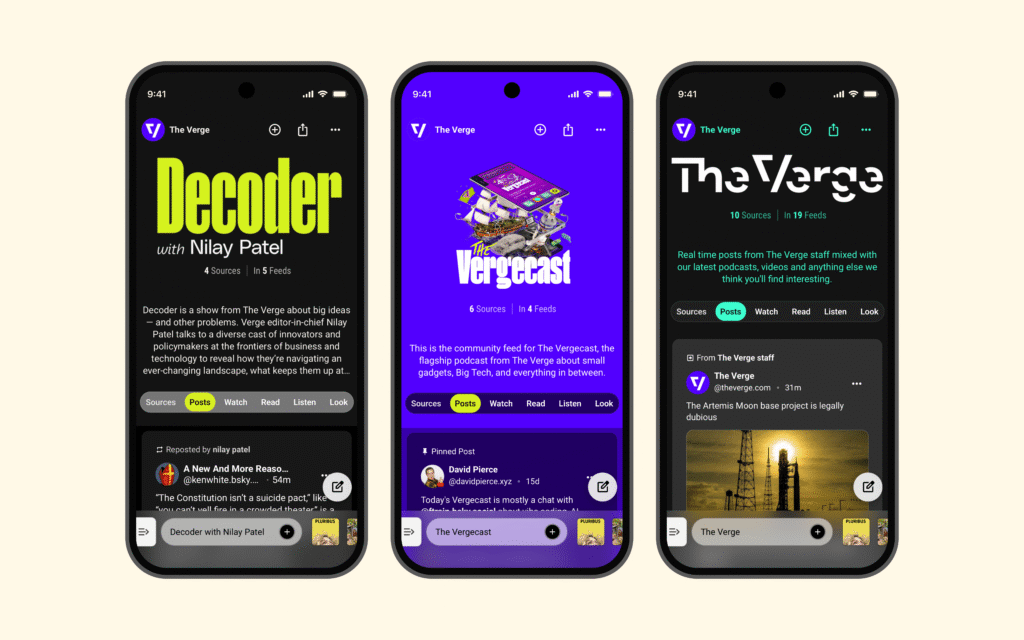
And Independent creators are using social websites to connect their real world passions with their online communities.
David Imel, writer and photographer, launched FilmFeed to recreate the magic of early Instagram for film photographers, curating favorite YouTube channels, podcasts and community contributions around the hashtag #FilmFeed.
David Rushing created All Net, a community-driven site for NBA fans that pulls together basketball conversations, league news, videos and realtime game commentary with hashtag posts from across platforms.
These early examples show what’s possible when communities are built around shared interests instead of locked inside a single platform.
How Social Websites Work
Social websites are powered by Surf feeds, designed and controlled by the people, publishers and creators who make them. In just a few quick steps anyone can create a Surf feed and publish it as a social website.
To start a Surf feed, go to surf.social, sign up and select +Create Feed in the sidebar. Users follow the prompts to add favorite sources, assign a community hashtag or set filters to customize the feed. They can even decide how they want others to experience the feed, setting it to open in the mode of their choice: posts, watch, listen or look. When the feed is built, the owner can assign a custom domain (up to 5 per user) in the feed header’s three-dot menu to create a social website to share with others.
By combining content and conversations from across social platforms, Surf social websites become destinations to keep up on anything you’re interested in. And this is just the beginning. More customization tools are on the way, including custom headers, colors and additional feed management features.
Most importantly, social websites are designed to live beyond Surf itself. They can be shared across the web, linked from existing sites and used as a home for communities wherever they already gather.
Explore What People Are Building
More than 15,000 Surf feeds have already been created by beta users around every imaginable interest, from sports and politics to technology, photography and local communities. The first social websites launching today, along with editorially picked featured feeds, can be found in the Discover tab on Surf.social.
We believe this is the beginning of a new model for social media — one where creators and communities have more ownership, more flexibility and more control.
We can’t wait to see what people build.